Short answer: Before you hire a local SEO company, ask about their experience with businesses like yours, who will do the work, how they handle your Google Business Profile and reviews, which tactics they use to build links and pages, how they measure results, and what happens to your accounts if you leave. Good answers are specific and plain. Bad ones are vague, defensive or too good to be true.
Most first calls with an SEO company go the same way. They talk for twenty minutes, you nod a lot, and you hang up not quite sure what you learned. That’s partly because the call is designed as a pitch. It doesn’t have to stay one.
This is a list you can actually bring to the call. Each question comes with what a good answer sounds like and what should make you pause. Skim it, pick the ten that matter most for your business, and write the answers down. Comparing notes afterward is where the real decision gets made.
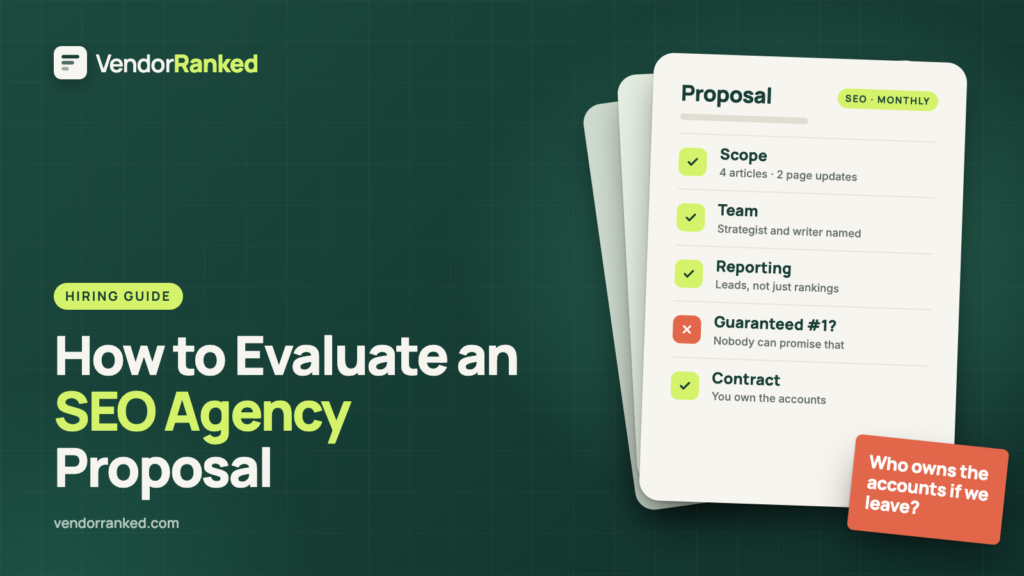
If you already have a written proposal, our guide to evaluating an SEO agency proposal covers the document. This one covers the conversation.
Part 1: Do they know businesses like yours?
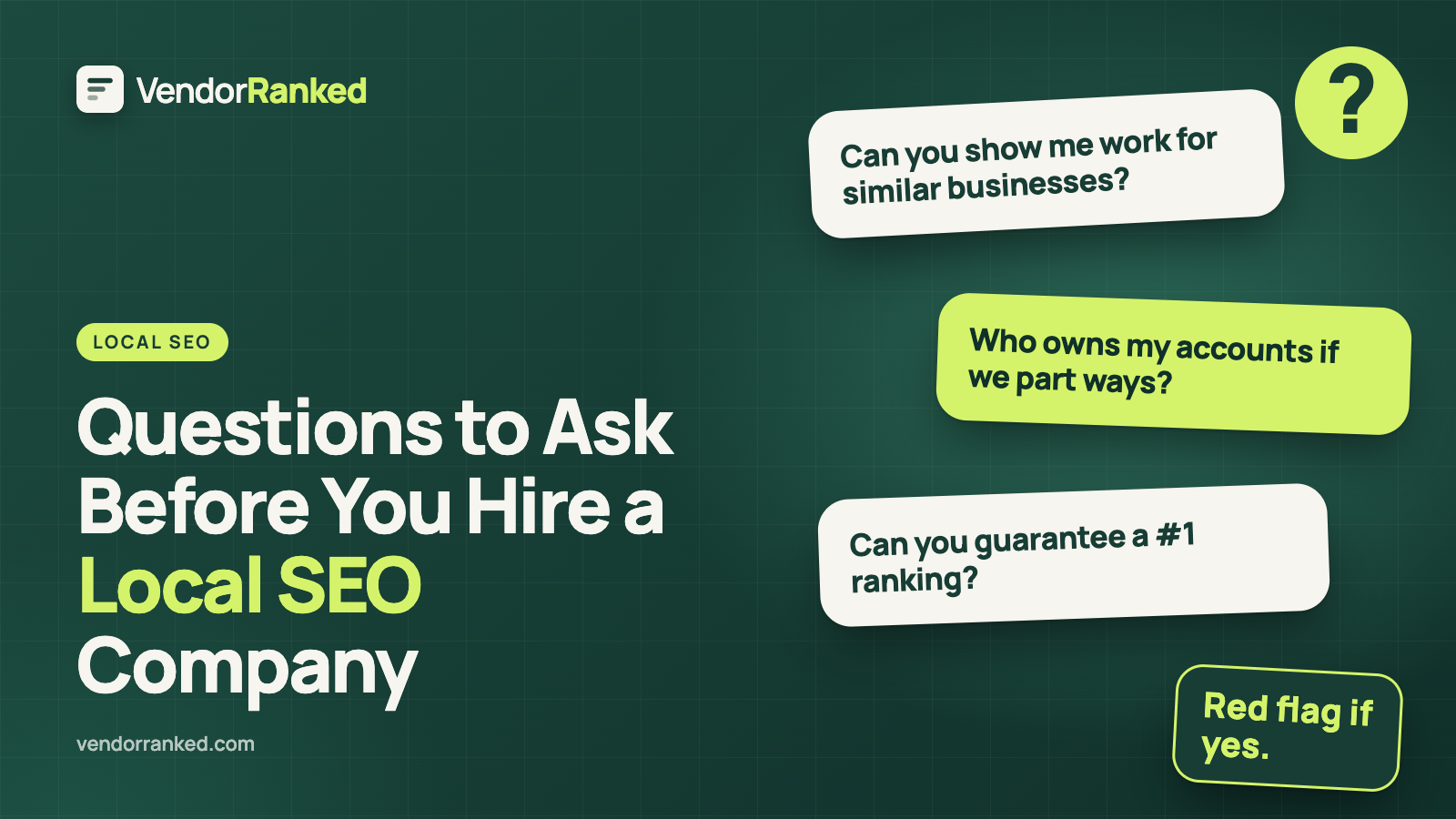
1. “Can you show me work for businesses similar to mine?”
Good answer: Two or three examples from comparable businesses, with what they did and what changed, ideally with a reference you can call. Google’s own guidance on hiring an SEO starts here: ask for examples of past work and success stories.
Pause if: They only show enormous brands, can’t share any examples, or the case studies are all screenshots with the business names blurred and no context.
2. “What’s your experience in my industry and my market?”
A company that has worked with dentists knows how dentist searches differ from plumber searches. Experience in your area counts too, though a good remote team can work anywhere.
Pause if: The honest answer is “none,” and they don’t bring it up themselves. New-to-your-industry isn’t disqualifying. Pretending otherwise is.
3. “How long have you been doing this, and who’s actually done it?”
Google lists years in business among the questions worth asking. Just as useful: how long the person who’ll run your account has done this work.
Part 2: Who’s doing the work?
4. “Who will work on my account, and will I talk to them?”
Good answer: Names and roles, and a clear point of contact.
Pause if: “Our team will handle it,” with no names.
5. “Is any of the work outsourced?”
Plenty of good companies use freelancers or partners. You’re asking so there are no surprises, not because outsourcing is wrong.
6. “How will you talk to me, and how often?”
Google advises asking how you’ll communicate and whether they’ll tell you about every change and explain why. You want a regular rhythm: a monthly report, a standing call, a quick reply when you have a question.
Part 3: The local part
This is where “local SEO company” and “SEO company that happens to be nearby” separate. Local search runs on Google Business Profile, reviews and consistent business information. A company that does local SEO well will have thoughtful answers here.
7. “How will you handle my Google Business Profile?”
Good answer: They’ll check that you’re eligible, make sure the information is accurate and complete, choose the right categories, add photos, and keep it up to date. The profile should be in your name, with them added as a manager.
Pause if: They plan to create a new profile under their own account, or won’t say who’ll own it.
8. “What would you do about my address or service area?”
Google’s rules say a profile must represent a real, precise location. P.O. boxes and virtual offices aren’t eligible, and businesses that travel to customers should hide their address. Service areas generally shouldn’t stretch more than about two hours’ drive from your base.
Pause if: They suggest using a mailbox or a virtual office address to “show up” in another city. Suspension risk isn’t worth it.
9. “How do you get more reviews?”
Good answer: A simple process for asking real customers, such as a direct review link by text or email after a job, and a plan to respond to every review.
Pause if: They offer to “get you reviews” without involving your customers. The Federal Trade Commission’s rule on fake reviews bans creating or buying reviews from people who don’t exist or never used the business, and offering incentives conditioned on positive sentiment. You, the business, can be held responsible too.
10. “What will you do about location pages?”
If you serve several towns, separate pages can help when each has something real to say: the services you offer there, local projects or context, local customers’ questions. Pages that are identical except for the city name aren’t helpful. Google’s spam policies treat mass-produced, low-value pages as a violation.
11. “How will you keep my name, address and phone number consistent?”
Listings on directories and maps should all match. Ask who checks them and how often.
Part 4: Methods and honesty
12. “How do you earn links?”
The answer should involve earning mentions from real local sources: chambers of commerce, sponsorships, local news, partnerships, useful content. Google’s rules prohibit buying or selling links to influence rankings, along with automated link-building tools.
Pause if: “We have a network of sites,” or a number of links promised for a flat price.
13. “Do you follow Google’s guidelines?”
Google asks hiring businesses to check this, and a good company will say yes without hesitation and cite Google’s documentation when it recommends something.
14. “Can you guarantee a ranking?”
The right answer is no. Google states plainly that no one can guarantee a number-one ranking, and advises finding someone else if a company promises first place. Also be cautious of claims of a “special relationship” with Google or a “priority submit.”
15. “What results do you expect, and by when?”
Good answer: A range, a timeline measured in months, the assumptions behind them, and what you’ll both watch along the way.
Pause if: A specific date or traffic number delivered with total confidence.
Part 5: Measuring success
16. “What will you report on?”
For a local business, the most useful numbers tend to be calls, direction requests, form submissions and booked jobs from search, alongside visibility in the map results. Ask to see a sample report.
17. “Will I have direct access to my data?”
You should be able to see your analytics and Search Console without asking permission. If an agency needs access to Search Console for an audit, read-only is enough, per Google’s advice.
18. “How do we know if it isn’t working?”
A confident company has a plan for that conversation. Listen for whether they describe what they’d change, or whether the answer is “it just takes time.”
Part 6: Contracts and leaving
19. “What’s the minimum term and the notice period?”
Read it before the call ends if you can. Month-to-month after a short initial period is common. Long lock-ins with penalties need a reason.
20. “Who owns the content, accounts and data?”
It should be you. Ask specifically about the website, written content, analytics, Search Console and your Business Profile.
21. “What happens if we part ways?”
You want a clean handoff of everything, in writing. Remember that Google reminds site owners they’re responsible for the actions of the companies they hire.
22. “Can I talk to a current or past client?”
Google’s guidance suggests asking references whether the work was useful, whether the company was easy to work with, and whether it was effective. Any good company will have people willing to speak.
A few red flags to listen for
- You’re contacted unprompted by email with a “free audit” claiming serious problems with your site. Google advises being skeptical of out-of-the-blue emails.
- They won’t explain their methods.
- They pressure you to sign immediately.
- They talk only about rankings, never about customers.
- They want admin access to everything before you’ve signed.
How to use this list
- Pick your top ten questions. Include at least three from the local section.
- Ask the same questions of two or three companies.
- Write down the answers, then score them afterward, not during the call.
- Rank how clearly they answered, not how impressive they sounded.
- Follow up on anything fuzzy by email. A written reply is easier to compare and easier to hold someone to.
Frequently asked questions
What should I ask a local SEO company before hiring them?
Ask for examples from similar businesses, who will do the work, how they’ll handle your Google Business Profile and reviews, how they build links, how they measure results, and who owns the accounts and content if you leave.
How much does local SEO cost?
It varies widely with your market, competition and scope, so we don’t quote a figure here. Ask each company what’s included each month, and compare the deliverables, not just the price.
Can a local SEO company guarantee first place on Google?
No. Google says no one can guarantee a number-one ranking. A promise of first place is a reason to look elsewhere.
Should my Google Business Profile be in my name or the agency’s?
Yours. Add the agency as a manager so you keep control and access if you ever switch.
Are fake reviews a real risk?
Yes. The FTC’s final rule bans buying, selling or creating fake reviews and testimonials, and the FTC can seek civil penalties from knowing violators. Reviews should come from real customers.
How long does local SEO take to work?
Usually months rather than weeks, depending on competition and your starting point. Treat anyone who promises results in days with caution.
Where to go from here
If you’re deciding between a neighborhood firm and a bigger one, read Local or National: Choosing the Right Kind of SEO Agency. When you’re ready to build a shortlist, browse the SEO agency rankings by state and read how we rank, so you know what stands behind the order.
Sources
- Google Search Central: Do you need an SEO?
- Google Search Central: Spam policies for Google web search
- Google Business Profile Help: Guidelines for representing your business
- Federal Trade Commission: Final rule banning fake reviews and testimonials
Last reviewed October 14, 2026. This is general guidance, not legal advice. VendorRanked rankings are editorial and are never affected by payment; see our advertising disclosure.